
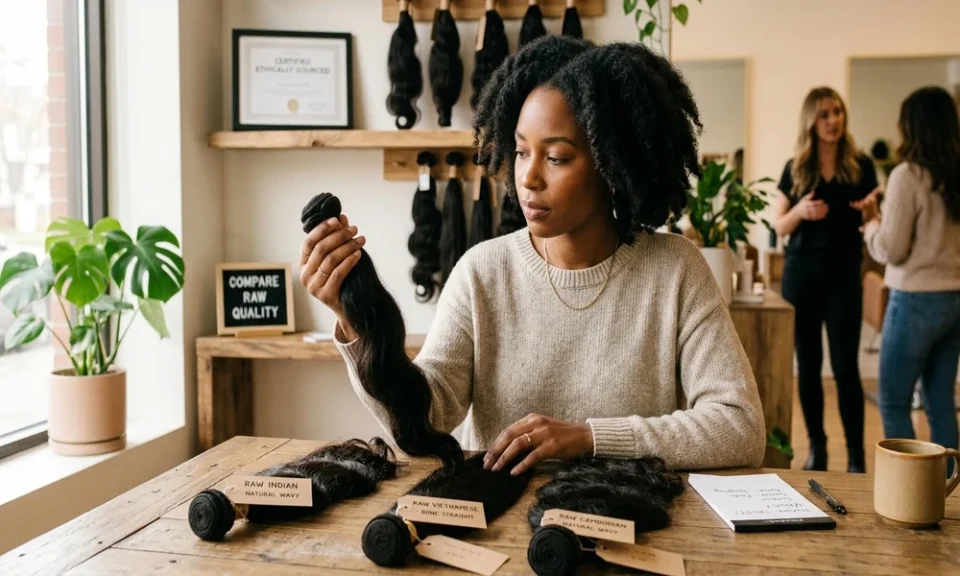
Buying premium human hair online increasingly requires more than comparing photographs, prices and curl patterns. Customers want to understand what they are actually purchasing, how the hair has been sourced, whether it has been altered and what they can realistically expect after installation and repeated wear. As the premium hair market becomes more competitive, transparency is becoming an important part of the buying experience. Brands that clearly explain product characteristics, natural variations, processing methods and policies can help shoppers make more confident decisions while reducing the uncertainty that often surrounds terms such as raw, virgin and unprocessed hair.
Transparency Is Becoming a Major Measure of Hair Quality
For women who regularly wear textured or natural hair, purchasing extensions often involves looking beyond an attractive finished hairstyle and examining how closely a company explains the product itself. When comparing theBest Raw Hair Companies, informed shoppers increasingly look for clear information about origin, texture, density, bundle construction and processing rather than relying entirely on marketing claims. A company that explains what customers should realistically expect can create greater confidence before the order is ever placed.
This matters because words such as “raw,” “virgin” and “unprocessed” are frequently used across the industry, yet shoppers may find that different sellers use these descriptions differently. Strong product communication should therefore go beyond labels. Customers benefit from knowing whether a texture has been chemically treated, steam processed, colored or otherwise altered, as well as whether variations between bundles should be expected.
Useful transparency can include details such as:
- Hair origin or sourcing information
- Approximate bundle weight and available lengths
- Whether texture differences may occur naturally
- Processing or coloring disclosures
- Recommended maintenance and expected longevity
For businesses, this level of detail is not simply educational. It helps establish expectations early, reducing the likelihood that customers will purchase based on assumptions that the product was never designed to meet.
Consistency and Quality Control Matter More Than Perfect Uniformity
Customers naturally want consistency when spending more on premium hair, but consistency does not necessarily mean every bundle should look identical. Genuine hair can display slight differences in wave formation, strand characteristics or natural color. Businesses that communicate these possibilities can appear more credible than sellers promising perfectly identical bundles while simultaneously describing the product as minimally processed.
A dependable quality-control process should focus on standards that genuinely affect the customer experience. Bundles should be inspected for appropriate weight, construction, excessive shedding, unusual tangling, damaged strands and consistency with the company’s published product description. Shoppers are increasingly interested in whether the hair they receive performs similarly to the hair presented online rather than whether every individual wave sits in exactly the same position.
Clear photographs and realistic descriptions are equally important. Highly styled images can inspire buyers, but customers should also be able to understand how the product may look before extensive styling. Showing texture character, fullness and natural variation gives shoppers a better foundation for deciding whether a particular product suits their expectations.
Detailed Product Information Helps Buyers Judge Long-Term Value
Women selecting textured and natural-looking extensions may also compare how well specific products support the hairstyles they intend to wear. For example, shoppers researchingraw wavy hair bundles may want to know much more than how attractive the wave appears in a photograph. They may consider density, movement, styling flexibility, maintenance requirements and how the texture is expected to behave after washing.
That information changes the conversation from price alone to long-term value. A lower initial price may seem attractive, but buyers may think differently when comparing how frequently a product needs replacing, how well it withstands normal maintenance and whether its characteristics remain dependable over time. Premium positioning becomes easier to justify when customers understand what contributes to the value they are receiving.
Return and exchange policies also influence this calculation. Straightforward policies can signal that a company has thought carefully about the customer experience. Buyers should be able to understand eligibility requirements, time limits and any conditions concerning opened, altered or installed hair before completing their purchase.
Reviews and Realistic Expectations Build Stronger Customer Trust
Customer reviews provide another layer of reassurance because they show how products perform outside carefully controlled brand photography. Buyers often pay attention to comments about softness, shedding, texture accuracy, longevity, communication and how the hair responds after washing. A broad collection of detailed reviews can therefore help shoppers validate the information presented on the product page.
Businesses benefit when their descriptions and customer experiences consistently align. Accurate expectations can lead to fewer misunderstandings, fewer avoidable returns and stronger reviews. They can also increase the likelihood that a satisfied customer returns because she already understands the company’s product standards and communication style.
Trust becomes especially valuable in premium categories where customers may make repeat purchases over several years. Rather than trying to make every product sound flawless, businesses can strengthen credibility by explaining both the benefits of the hair and the natural characteristics customers should expect.
Final Notes for Long-Term Success
The premium human-hair market is increasingly shaped by informed customers who want evidence behind product claims. Sourcing explanations, honest processing disclosures, careful quality control, realistic photography, clear policies and meaningful customer feedback all give shoppers better tools for evaluating a purchase.
For hair companies, transparency can become more than a customer-service practice; it can become a competitive advantage. Businesses that consistently communicate what customers are buying, what natural variations may occur and how products should perform can reduce uncertainty while strengthening credibility. Over time, that confidence can support better reviews, fewer preventable returns, stronger repeat purchasing and the long-term customer relationships that premium brands depend on.
